A Closer Look At Salvia: Big Family, Big Benefits
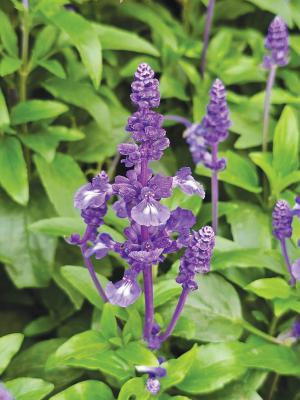 ✖  |
Salvia is a brilliant garden multitasker offering striking blooms that appeal to gardeners and pollinators alike. Many varieties are renowned for their medicinal and culinary uses. Best of all, salvia is beginner-friendly. The plant needs plenty of sun and well-draining soil, but otherwise thrives when left alone.
Salvia encompasses a large family of ornamental plants found worldwide. Sage remains one of the most popular options because of its prolific ability to fill herb gardens with pollinator-friendly flowers.
Sage tends to be vigorous, fast-growing, and able to withstand extreme heat and cold without issue. The brightly colored blooms also make excellent additions to floral displays.
The Salvia family is a good choice for gardens with deer and rabbit problems because its resinous, aromatic foliage deters browsing animals.
While salvia is a perennial in most climates, it can also be grown as an annual or overwintered indoors. Full sun is best, though afternoon shade can help in hot climates. Container gardening suits this family well, especially in areas with limited sunlight. Use well-draining, sandy or loamy soil with a slightly acidic to neutral pH. Container-grown salvia is also easy to bring indoors when frost risk is high.
Timing matters when planting sage. Aim for mild weather in the spring or fall to give plants the best shot at success. Outdoor sowing works best after the last spring frost date. Alternatively, start seedlings indoors six to eight weeks early. These tiny seeds can be sprinkled directly on the soil surface. No need to add much on top. The plants will scale up quickly, so give them at least 18 in. of spacing. Despite this vigorous growth, these hardy plants rarely (if ever) require staking.
Fertilizer needs for this family are minimal. A spring application of compost will sustain most plants throughout the year. Likewise, most salvia varieties are low-water plants once established. It’s best to water at the base to avoid wetting the leaves.
Pests tend to leave salvia alone, but be on the lookout for slugs, spittlebugs and spider mites. Young plants can benefit from a repellent spray during the first few months. The leaves become more bitter over time.
When well-cultivated, salvia offers blooms for long periods with minimal maintenance. Sage especially benefits from regular pruning to stay robust. Remove old, woody stems to encourage new growth — especially for plants you plan to grow as perennials. Even with this care, sage plants tend to become too woody after 5 years and are best replaced.
Regular trimming helps maintain the plant’s shape and bushiness. Consider leaving frost-killed foliage on salvia plants over the winter, as it provides habitat for many beneficial insects. When spring arrives, you can cut plants down to about an inch.
Stem cuttings from existing plants can be an efficient, cost-effective replacement strategy. Just take a 4 to 6-in. section from young, non-woody stems, remove the lower leaves, dip the end in rooting hormone, and plant in moist, soilless potting mix.
Medicinally, the Salvia family is known for its antioxidant and antimicrobial properties. Some varieties show evidence of enhancing cognitive function and easing menopausal symptoms. Most are non-toxic, though a few (Salvia divinorum, “purple sage”) have psychoactive properties and should be handled with caution.
Click here to download page story appeared in.
Click here to read entire issue
A Closer Look At Salvia: Big Family, Big Benefits
Salvia is a brilliant garden multitasker offering striking blooms that appeal to gardeners and pollinators alike. Many varieties are renowned for their medicinal and culinary uses. Best of all, salvia is beginner-friendly. The plant needs plenty of sun and well-draining soil, but otherwise thrives when left alone.
Salvia encompasses a large family of ornamental plants found worldwide. Sage remains one of the most popular options because of its prolific ability to fill herb gardens with pollinator-friendly flowers.
Sage tends to be vigorous, fast-growing, and able to withstand extreme heat and cold without issue. The brightly colored blooms also make excellent additions to floral displays.
The Salvia family is a good choice for gardens with deer and rabbit problems because its resinous, aromatic foliage deters browsing animals.
While salvia is a perennial in most climates, it can also be grown as an annual or overwintered indoors. Full sun is best, though afternoon shade can help in hot climates. Container gardening suits this family well, especially in areas with limited sunlight. Use well-draining, sandy or loamy soil with a slightly acidic to neutral pH. Container-grown salvia is also easy to bring indoors when frost risk is high.
Timing matters when planting sage. Aim for mild weather in the spring or fall to give plants the best shot at success. Outdoor sowing works best after the last spring frost date. Alternatively, start seedlings indoors six to eight weeks early. These tiny seeds can be sprinkled directly on the soil surface. No need to add much on top. The plants will scale up quickly, so give them at least 18 in. of spacing. Despite this vigorous growth, these hardy plants rarely (if ever) require staking.
Fertilizer needs for this family are minimal. A spring application of compost will sustain most plants throughout the year. Likewise, most salvia varieties are low-water plants once established. It’s best to water at the base to avoid wetting the leaves.
Pests tend to leave salvia alone, but be on the lookout for slugs, spittlebugs and spider mites. Young plants can benefit from a repellent spray during the first few months. The leaves become more bitter over time.
When well-cultivated, salvia offers blooms for long periods with minimal maintenance. Sage especially benefits from regular pruning to stay robust. Remove old, woody stems to encourage new growth — especially for plants you plan to grow as perennials. Even with this care, sage plants tend to become too woody after 5 years and are best replaced.
Regular trimming helps maintain the plant’s shape and bushiness. Consider leaving frost-killed foliage on salvia plants over the winter, as it provides habitat for many beneficial insects. When spring arrives, you can cut plants down to about an inch.
Stem cuttings from existing plants can be an efficient, cost-effective replacement strategy. Just take a 4 to 6-in. section from young, non-woody stems, remove the lower leaves, dip the end in rooting hormone, and plant in moist, soilless potting mix.
Medicinally, the Salvia family is known for its antioxidant and antimicrobial properties. Some varieties show evidence of enhancing cognitive function and easing menopausal symptoms. Most are non-toxic, though a few (Salvia divinorum, “purple sage”) have psychoactive properties and should be handled with caution.
To read the rest of this story, download this issue below or click
here to register with your account number.