Angelica — A Vintage Ornamental
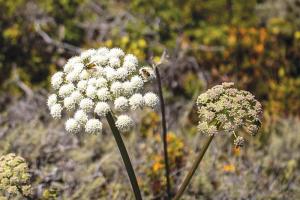 ✖  |
The angelica plant, known by names such as Michael the Archangel, Masterwort, and the Holy Ghost, is an aromatic medicinal herb commonly found in meadows, marshes and other damp areas. It’s most easily recognized by its large, foamy-domed flowerheads, and this biennial can grow over 8 ft tall.
There are over 90 species of angelica, mostly native to the colder regions of Scandinavia, Russia, Greenland and Iceland, with a few species native to North America. It belongs to the umbellifer or Apiaceae family and is related to carrots, Queen Anne’s lace and parsley. Most varieties have a tall, structural appearance, with greenish-purple stems and serrated, slightly feathery leaves.
Garden angelica, the most common variety, is widely used in cooking and traditional medicine. It’s a popular ingredient in traditional English dessert recipes and is often used to garnish cakes and sweets.
Almost every part of the plant is edible, and many describe angelica’s aroma as a blend of sweet vintage perfume and carrot. This bold yet delicate flavor can be overshadowed when paired with too many ingredients. Try pairing it with orange, ginger, tarragon, chervil, mint and dill instead of dark or milk chocolate.
Stems are the most intensely flavored part of the plant. Once peeled, the young stalks can be used like celery. Tender stems can also be boiled, then cut into pieces and candied for use in cookies and cakes. For the best yield, harvest the stalks in their second year or early in the third year, before the plant goes to seed. Today, candied angelica stems can cost between $24 and $30 per lb.
Angelica’s foamy blossoms can be eaten as a vegetable or dessert. Likewise, the roots are a popular choice for infusing herbal liqueurs.
The plant’s smaller, more tender leaves are edible, though they can be bitter. They can be chopped into salads or used as a coating for fish. Alternatively, blanch the leaves in water with a pinch of baking soda, shock them in ice water, then dip each in sugar syrup and roll them in crystallized sugar. The result is an aromatic garnish perfect for desserts and drinks.
The seeds, which serve as a fennel substitute, offer a subtle licorice flavor. Pick the seeds from the flower heads and dry them in a dehydrator. They’ll last for years in an airtight container.
Angelica is easy to find in ditches along the roadside. While these spots might be contaminated by road runoff, they could indicate larger colonies nearby. However, angelica closely resembles highly toxic plants such as water hemlock and hogweed. A safer option for human consumption is to grow your own.
Angelica plants have long taproots, making them difficult to transplant or grow in pots. It’s best to direct-seed in the fall or cold-stratify in the fridge for 4 to 6 weeks before planting indoors.
Space the plants 1 to 3 ft apart, and thin out patches to ensure they receive plenty of air and light. Taller varieties may need staking to stay upright. They’ll add height and interest to the back of garden beds, especially in mixed plantings.
The plants grow best in full sun but can tolerate light shade. Plant seedlings where they’ll receive light afternoon shade to prevent leaf scorch and help retain soil moisture longer, and water them enough so the soil never dries out completely.
Most angelicas are biennials that flower only in their second year, then go to seed and die. Leave the flowers in place in the fall to allow the plants to reseed naturally, or collect the seed by hand. As long as you don’t deadhead spent blooms, you should enjoy a plentiful display of angelica for many growing seasons to come.
Click here to download page story appeared in.
Click here to read entire issue
Angelica — A Vintage Ornamental
The angelica plant, known by names such as Michael the Archangel, Masterwort, and the Holy Ghost, is an aromatic medicinal herb commonly found in meadows, marshes and other damp areas. It’s most easily recognized by its large, foamy-domed flowerheads, and this biennial can grow over 8 ft tall.
There are over 90 species of angelica, mostly native to the colder regions of Scandinavia, Russia, Greenland and Iceland, with a few species native to North America. It belongs to the umbellifer or Apiaceae family and is related to carrots, Queen Anne’s lace and parsley. Most varieties have a tall, structural appearance, with greenish-purple stems and serrated, slightly feathery leaves.
Garden angelica, the most common variety, is widely used in cooking and traditional medicine. It’s a popular ingredient in traditional English dessert recipes and is often used to garnish cakes and sweets.
Almost every part of the plant is edible, and many describe angelica’s aroma as a blend of sweet vintage perfume and carrot. This bold yet delicate flavor can be overshadowed when paired with too many ingredients. Try pairing it with orange, ginger, tarragon, chervil, mint and dill instead of dark or milk chocolate.
Stems are the most intensely flavored part of the plant. Once peeled, the young stalks can be used like celery. Tender stems can also be boiled, then cut into pieces and candied for use in cookies and cakes. For the best yield, harvest the stalks in their second year or early in the third year, before the plant goes to seed. Today, candied angelica stems can cost between $24 and $30 per lb.
Angelica’s foamy blossoms can be eaten as a vegetable or dessert. Likewise, the roots are a popular choice for infusing herbal liqueurs.
The plant’s smaller, more tender leaves are edible, though they can be bitter. They can be chopped into salads or used as a coating for fish. Alternatively, blanch the leaves in water with a pinch of baking soda, shock them in ice water, then dip each in sugar syrup and roll them in crystallized sugar. The result is an aromatic garnish perfect for desserts and drinks.
The seeds, which serve as a fennel substitute, offer a subtle licorice flavor. Pick the seeds from the flower heads and dry them in a dehydrator. They’ll last for years in an airtight container.
Angelica is easy to find in ditches along the roadside. While these spots might be contaminated by road runoff, they could indicate larger colonies nearby. However, angelica closely resembles highly toxic plants such as water hemlock and hogweed. A safer option for human consumption is to grow your own.
Angelica plants have long taproots, making them difficult to transplant or grow in pots. It’s best to direct-seed in the fall or cold-stratify in the fridge for 4 to 6 weeks before planting indoors.
Space the plants 1 to 3 ft apart, and thin out patches to ensure they receive plenty of air and light. Taller varieties may need staking to stay upright. They’ll add height and interest to the back of garden beds, especially in mixed plantings.
The plants grow best in full sun but can tolerate light shade. Plant seedlings where they’ll receive light afternoon shade to prevent leaf scorch and help retain soil moisture longer, and water them enough so the soil never dries out completely.
Most angelicas are biennials that flower only in their second year, then go to seed and die. Leave the flowers in place in the fall to allow the plants to reseed naturally, or collect the seed by hand. As long as you don’t deadhead spent blooms, you should enjoy a plentiful display of angelica for many growing seasons to come.
To read the rest of this story, download this issue below or click
here to register with your account number.