
2026 - Volume #50, Issue #4, Page #31
[ Sample Stories From This Issue | List of All Stories In This Issue | Print this story
| Read this issue]
Rare Dog Breed Captures Hearts Worldwide
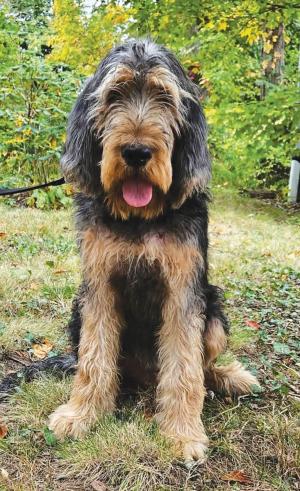 |

“Otterhounds are considered a vulnerable breed,” says Robert Burnett, director of The Otterhound Club of America. “It’s a shame because they make wonderful companion animals. Many of us have more than one. Their scarcity means many people aren’t aware of what wonderful, versatile dogs they are.”
These large, rough-coated dogs have oversized heads and strong bodies, along with slightly webbed feet that make them well-suited for water. They tend to shuffle when walking, are amiable and even-tempered, and have an average lifespan of 10 to 13 years.
“The term ‘otter-hounds’ was given to any dog that could keep the scent of an otter and dates as far back as Queen Elizabeth I,” says club member Karmen Lange. “In the United Kingdom, fish were an easy, plentiful and nutritious source of food for a large majority of the population for centuries, and otters agreed. Otters could deplete a small pond’s entire fish stock in a day, and smart, water-loving pack dogs seemed the answer.”
The breed still has plenty of appeal today.
“The qualities that make Otterhounds great otter hunters are the same ones that make them special,” says member Eibhlin Glennon. “They have great noses that enable them to follow a specific scent over land and water, and the persistence to do it for miles.”
Today, Otterhounds use their keen sense of smell to track and trail specific human scents, making them well-suited for AKC Tracking and Search-and-Rescue training.
“Curiosity is another of the breed’s special characteristics,” Glennon says. “To capture an otter, hounds need the ability to problem solve independently. They don’t depend on humans to satisfy their curiosity or tell them what to do.”
Likewise, the otterhound’s pack background means they’re social with people and other animals.
“Their fuzzy cuteness makes them excellent picks for therapy dogs and visitors to schools and nursing homes,” Glennon says. “Otterhounds are real people magnets.”
Burnett has a specific owner in mind for Otterhounds.
“Someone with a good sense of humor. These animals are smart and can be stubborn, but are also playful and gentle.”
Because they’re scent hounds, he recommends a fenced yard and keeping them on a lead.
Overall care needs are minimal.
“This breed requires coat maintenance,” says Katie Wright. “It’s not as extensive as other dogs, but a good brush out or comb out every week or two will decrease the risk of matting.”
She cautions owners to monitor their puppies’ exercise levels to support healthy bone growth.
“Though their outward appearance and goofy personalities make some people hesitant, the Otterhound is extremely versatile. We’ve seen Otterhounds compete in Barn Hunt, agility, scent work, tracking, dock diving and more. They also work as therapy dogs.”
Thanks to their size and social nature, Otterhounds require plenty of exercise and thrive with training.
“Classes using positive reinforcement are best,” says Glennon. “They don’t thrive on long stretches of repetition, so some trainers will not be happy with this breed. People who like a challenge will find their match, though.”
Contact: FARM SHOW Followup, The Otterhound Club of America (info@otterhound.org; www.otterhound.org).
Click here to download page story appeared in.

Click here to read entire issue
To read the rest of this story, download this issue below or click here to register with your account number.