Vintage Stained-Glass Fire Screens Still Popular
 ✖  |
In the era before central heating, fireplaces were the heart of the home. It’s not surprising that open flames often posed risks indoors. The fire screen was introduced as a device placed in front of fireplaces to prevent stray sparks from causing trouble. Because of their prominent position in the room, fireplace screens also became decorative elements.
The 18th century saw fire screens crafted from various materials, including wood, leather, wicker and papier-mâché. Paintings, fabric coverings and embroidered designs all enjoyed periods of popularity, and stained-glass screens became popular in the late 1800s.
Stained-glass fireplace screens offer an easy way to bathe rooms in jewel-toned light. For those lucky enough to have a fireplace facing a window, the effect of a stained-glass fire screen is especially enchanting. Sunlight filters through, changing the reflections on the floors and windows throughout the day.
True vintage pieces carry a sense of history and craftsmanship, with hand-cut shapes and subtle imperfections that set them apart from mass-produced décor. Online, you can find options ranging from $160 to $2,500 and more at auction.
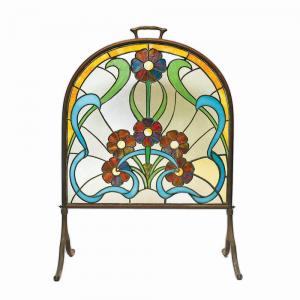
At the higher end, there’s an Art Nouveau fireplace screen in the Tiffany style from around 1910. It’s currently listed on eBay for $2,500. In contrast, a 1920s model in the country house style (price not listed) looks distinctly modern because of its multi-sized circles of vibrant stained glass. Metal scrollwork around the edges offers plenty of space for dancing flames to catch the light.
Fireplace screen designs vary by era. Victorian and Edwardian styles, for example, typically feature intricate patterns and rich colors, with motifs such as geometric borders, stylized blossoms, scrollwork, and saturated reds, greens and blues.
Art Nouveau designs, in contrast, emphasize flowing lines and natural forms. Curving vines, peacocks and stylized female figures appear in soft, muted colors, often arranged in asymmetrical layouts.
The Art Deco style features bold, geometric shapes. Sunbursts and contrasting colors, including black-tinted glass, are common.
Finally, Gothic and Medieval Revival fire screens will resemble a church window. They feature rich, saturated colors, pointed arches and heavy metal framing.
There’s no reason to feel limited by your house’s architectural style. Stained-glass fire screens provide an authentic glow to period-style homes and also bring unexpected charm to eclectic, minimalist and even brick-heavy industrial spaces. Best of all, they add visual interest to what would otherwise be a dark, empty space when the fire isn’t lit.
Determining whether vintage stained glass is authentic is a skill best left to experts. Still, a few clues can help identify a piece’s age. Authentic antique stained glass may have waviness or air bubbles in the glass, slight variations in color and texture between panes, and a patina on the metal.
While antique stained-glass fireplace screens are beautiful, they require careful handling around heat and fire. Their materials can be fragile, especially as they age. It’s safest to keep the screens several inches away from direct flames to prevent the hottest part of the fire from touching the glass. This also helps ensure good airflow between the firebox and the screen. Over time, excessive heat can stress the glass and solder joints, leading to cracks and warping.
When selecting a vintage fire screen, carefully assess your specific needs. Whether the fireplace is functional or decorative influences the choice of materials. Fireproof models should be built solidly, have stable feet, and feature a design that maintains a safe distance between the flames and the glass.
Make sure the screen is stable and unlikely to be knocked over, especially in homes with kids and pets. If necessary, discreet supports or brackets can help secure the frame. Regularly inspect for loose joints and hairline cracks, particularly in high-heat environments. Additionally, it might be wise to keep a simple metal guard near the fireplace to catch sparks, with the stained glass set further back for decorative purposes.

Click here to read entire issue
Vintage Stained-Glass Fire Screens Still Popular
In the era before central heating, fireplaces were the heart of the home. It’s not surprising that open flames often posed risks indoors. The fire screen was introduced as a device placed in front of fireplaces to prevent stray sparks from causing trouble. Because of their prominent position in the room, fireplace screens also became decorative elements.
The 18th century saw fire screens crafted from various materials, including wood, leather, wicker and papier-mâché. Paintings, fabric coverings and embroidered designs all enjoyed periods of popularity, and stained-glass screens became popular in the late 1800s.
Stained-glass fireplace screens offer an easy way to bathe rooms in jewel-toned light. For those lucky enough to have a fireplace facing a window, the effect of a stained-glass fire screen is especially enchanting. Sunlight filters through, changing the reflections on the floors and windows throughout the day.
True vintage pieces carry a sense of history and craftsmanship, with hand-cut shapes and subtle imperfections that set them apart from mass-produced décor. Online, you can find options ranging from $160 to $2,500 and more at auction.
At the higher end, there’s an Art Nouveau fireplace screen in the Tiffany style from around 1910. It’s currently listed on eBay for $2,500. In contrast, a 1920s model in the country house style (price not listed) looks distinctly modern because of its multi-sized circles of vibrant stained glass. Metal scrollwork around the edges offers plenty of space for dancing flames to catch the light.
Fireplace screen designs vary by era. Victorian and Edwardian styles, for example, typically feature intricate patterns and rich colors, with motifs such as geometric borders, stylized blossoms, scrollwork, and saturated reds, greens and blues.
Art Nouveau designs, in contrast, emphasize flowing lines and natural forms. Curving vines, peacocks and stylized female figures appear in soft, muted colors, often arranged in asymmetrical layouts.
The Art Deco style features bold, geometric shapes. Sunbursts and contrasting colors, including black-tinted glass, are common.
Finally, Gothic and Medieval Revival fire screens will resemble a church window. They feature rich, saturated colors, pointed arches and heavy metal framing.
There’s no reason to feel limited by your house’s architectural style. Stained-glass fire screens provide an authentic glow to period-style homes and also bring unexpected charm to eclectic, minimalist and even brick-heavy industrial spaces. Best of all, they add visual interest to what would otherwise be a dark, empty space when the fire isn’t lit.
Determining whether vintage stained glass is authentic is a skill best left to experts. Still, a few clues can help identify a piece’s age. Authentic antique stained glass may have waviness or air bubbles in the glass, slight variations in color and texture between panes, and a patina on the metal.
While antique stained-glass fireplace screens are beautiful, they require careful handling around heat and fire. Their materials can be fragile, especially as they age. It’s safest to keep the screens several inches away from direct flames to prevent the hottest part of the fire from touching the glass. This also helps ensure good airflow between the firebox and the screen. Over time, excessive heat can stress the glass and solder joints, leading to cracks and warping.
When selecting a vintage fire screen, carefully assess your specific needs. Whether the fireplace is functional or decorative influences the choice of materials. Fireproof models should be built solidly, have stable feet, and feature a design that maintains a safe distance between the flames and the glass.
Make sure the screen is stable and unlikely to be knocked over, especially in homes with kids and pets. If necessary, discreet supports or brackets can help secure the frame. Regularly inspect for loose joints and hairline cracks, particularly in high-heat environments. Additionally, it might be wise to keep a simple metal guard near the fireplace to catch sparks, with the stained glass set further back for decorative purposes.
To read the rest of this story, download this issue below or click
here to register with your account number.