‘Tandemizing’ Tractors Boosted Horsepower
Tractor owners have always desired more power. When their own souped-up engines or larger tractors didn’t fully satisfy that urge, farmers found alternative solutions. Australian farmers are recognized for developing tandem tractors in the early 1900s, and the concept eventually spread to the U.K. and the U.S.
In 1956, the engineering department at Iowa State College (now Iowa State University) in Ames built a tandem tractor that combined a Model 8N Ford at the front with a Ford 860 at the rear. They tested it thoroughly in various field operations and found it superior to a single tractor in pulling power and PTO performance. An ISC research paper noted that the main disadvantage was that coupling two tractors together would’ve been problematic for most farmers.
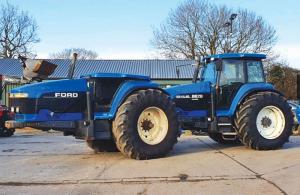
In the U.K., Ernest Doe & Sons of Essex built several versions of the Doe Triple-D tractor in 1958. The setup used two Fordsons connected by a drawbar turntable, with the rear tractor held by the turntable. Hydraulic cylinders activated the steering. Newer models, including the 100 hp and 130 hp, and the Triple D 150, which used two Ford Force 5000 tractors, were produced until production stopped in 1968.
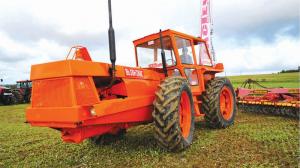
In France, the Bi Som Trac, painted pumpkin orange, had a single engine at the front powering four drive wheels. It followed the Bisom 40, which was based on two Someca 40 tractors connected in tandem. They could be easily decoupled so that the producer would have two separate tractors available. Production was discontinued in 1964.
Don Dufner of Buxton, N.D., coupled two Deere 830s in 1958 and added more coupled tractors over the years. He also combined three Deere tractors, each with its own engine, to power six wheels. In nearly 70 years of farming, Dufner bought countless Deere tractors, restored them, and often coupled them to produce extra power for his farming operation and tractor pulls. FARM SHOW has written about several of Dufner’s tractor combinations, including a recent recap in Vol. 49, No. 1.
Roanoke, Ill., crop farmer C. Robert Haas built a tandem tractor that combined a Deere 730 and 720. Unlike most tandems, which steered from the rear tractor because the front tractor’s wheels were removed, Haas’s design steered from the front with the rear tractor resting on the front tractor’s drawbar. He rigged controls for the rear tractor that he could reach from the 730’s driver seat. Haas coupled the tractors with a 6-in. I-beam main frame and later used a 4-in. H-beam, which provided 2 in. more ground clearance. He built the coupling for other farmers and later constructed a new tandem for his own farm using two Case 500 diesels. A family member still uses that setup.
Haas’s design and others from Illinois were described in a 1961 University of Illinois circular, Tandem Tractors Circular 829. Three different methods were shown, along with safety precautions that advised rigging up a kill switch for use if the tractors jackknifed and “practicing” driving in your yard before heading to the field.
FARM SHOW has published several articles about tandemized tractors over its 49-year history. In 1992 (Vol. 16, No. 1), Joe Wilson was featured with his tandem Allis-Chalmers. A double-up tractor built with two Deere 5020s was featured in Volume 18, No. 6. Earl Rockwell built his 4-WD tractor (Vol. 25, No. 1) by combining two Farmall F-30 rear ends with a 105-hp Detroit diesel engine.
Harry Lee was well known for building side-by-side tractors using vintage Farmalls. He even tripled his power with three F-20 engines side-by-side on a single frame. (Vol. 17, No. 4). Harry owned more than 50 rare and unusual tractors, all in excellent condition.
A tandem setup in Iowa that used two Oliver 1950 diesels was built by Clinton Martz, his son and a neighbor (Vol. 44, No. 6). Martz used the 200-hp tandem in his farming operation for six or seven years, “a big tractor in those days,” he says, and eventually replaced it with a 300-hp Steiger.
For details on the 1950s Iowa State and Illinois setups, visit:
https://dr.lib.iastate.edu/server/api/core/bitstreams/3e9df2a3-73e2-4462-b8d2-346a96cd94d6/content
Click here to download page story appeared in.
Click here to read entire issue
‘Tandemizing’ Tractors Boosted Horsepower
Tractor owners have always desired more power. When their own souped-up engines or larger tractors didn’t fully satisfy that urge, farmers found alternative solutions. Australian farmers are recognized for developing tandem tractors in the early 1900s, and the concept eventually spread to the U.K. and the U.S.
In 1956, the engineering department at Iowa State College (now Iowa State University) in Ames built a tandem tractor that combined a Model 8N Ford at the front with a Ford 860 at the rear. They tested it thoroughly in various field operations and found it superior to a single tractor in pulling power and PTO performance. An ISC research paper noted that the main disadvantage was that coupling two tractors together would’ve been problematic for most farmers.
In the U.K., Ernest Doe & Sons of Essex built several versions of the Doe Triple-D tractor in 1958. The setup used two Fordsons connected by a drawbar turntable, with the rear tractor held by the turntable. Hydraulic cylinders activated the steering. Newer models, including the 100 hp and 130 hp, and the Triple D 150, which used two Ford Force 5000 tractors, were produced until production stopped in 1968.
In France, the Bi Som Trac, painted pumpkin orange, had a single engine at the front powering four drive wheels. It followed the Bisom 40, which was based on two Someca 40 tractors connected in tandem. They could be easily decoupled so that the producer would have two separate tractors available. Production was discontinued in 1964.
Don Dufner of Buxton, N.D., coupled two Deere 830s in 1958 and added more coupled tractors over the years. He also combined three Deere tractors, each with its own engine, to power six wheels. In nearly 70 years of farming, Dufner bought countless Deere tractors, restored them, and often coupled them to produce extra power for his farming operation and tractor pulls. FARM SHOW has written about several of Dufner’s tractor combinations, including a recent recap in Vol. 49, No. 1.
Roanoke, Ill., crop farmer C. Robert Haas built a tandem tractor that combined a Deere 730 and 720. Unlike most tandems, which steered from the rear tractor because the front tractor’s wheels were removed, Haas’s design steered from the front with the rear tractor resting on the front tractor’s drawbar. He rigged controls for the rear tractor that he could reach from the 730’s driver seat. Haas coupled the tractors with a 6-in. I-beam main frame and later used a 4-in. H-beam, which provided 2 in. more ground clearance. He built the coupling for other farmers and later constructed a new tandem for his own farm using two Case 500 diesels. A family member still uses that setup.
Haas’s design and others from Illinois were described in a 1961 University of Illinois circular, Tandem Tractors Circular 829. Three different methods were shown, along with safety precautions that advised rigging up a kill switch for use if the tractors jackknifed and “practicing” driving in your yard before heading to the field.
FARM SHOW has published several articles about tandemized tractors over its 49-year history. In 1992 (Vol. 16, No. 1), Joe Wilson was featured with his tandem Allis-Chalmers. A double-up tractor built with two Deere 5020s was featured in Volume 18, No. 6. Earl Rockwell built his 4-WD tractor (Vol. 25, No. 1) by combining two Farmall F-30 rear ends with a 105-hp Detroit diesel engine.
Harry Lee was well known for building side-by-side tractors using vintage Farmalls. He even tripled his power with three F-20 engines side-by-side on a single frame. (Vol. 17, No. 4). Harry owned more than 50 rare and unusual tractors, all in excellent condition.
A tandem setup in Iowa that used two Oliver 1950 diesels was built by Clinton Martz, his son and a neighbor (Vol. 44, No. 6). Martz used the 200-hp tandem in his farming operation for six or seven years, “a big tractor in those days,” he says, and eventually replaced it with a 300-hp Steiger.
For details on the 1950s Iowa State and Illinois setups, visit:
https://dr.lib.iastate.edu/server/api/core/bitstreams/3e9df2a3-73e2-4462-b8d2-346a96cd94d6/content
To read the rest of this story, download this issue below or click
here to register with your account number.