Weaving Hobby Provides Exercise And Income
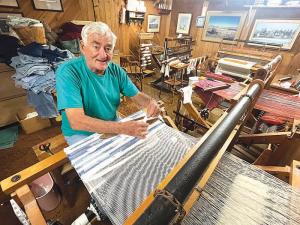
“I guess you could say I was born into weaving because my dad had me fill his shuttles when I was about 8 years old,” says Ralph Keyes, a retiree from Waseca, Minn. “Now it’s 80 years past those shuttle-filling days, and I spend several hours a day making rag rugs on four aging looms in the basement of our house.”
Retired after a lifetime of working as a teacher, school principal, county commissioner and appraiser, Keyes has spent the better part of 10 years on a hobby that provides plenty of exercise and a decent return on his time.
“I really don’t think of it as work at all,” Keyes says. “It’s something I really enjoy because there’s creativity and busyness involved.”
He works at the craft for 2 or 3 hr nearly every day.
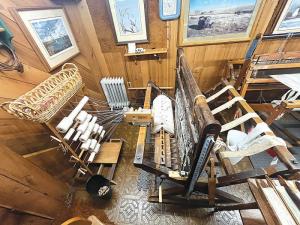
Keyes began weaving after he acquired the loom his father, Raymond, had used. He assembled it in his basement, ensuring the 360 warp strings were in perfect order.
“I wove my first rug probably 30 years ago and wanted the edges to be perfect without any fraying,” Keyes says. “After selling a few, I realized that most rugs get stomped on, chewed on and dirty, end up in a washer and come out with the edges all frayed. After that, I just slammed the materials together, and they were easier to make.”
He enjoyed using the first loom so much that he soon acquired three others, all of which are assembled and operational in his basement. Four more are unassembled in his garage. The assembled looms are 4 ft square and about 4 ft tall. They’re more than 100 years old, built by the Union Loom Company of Boonville, N.Y., between 1916 and 1930.
“In those 14 years, the company built 40,000 looms and, at one time, had 160 employees,” Keyes says. “The company doesn’t exist anymore, but weaving is still a hobby for many, supported by a small magazine that’s produced twice a year.”
Keyes made 160 rugs in 2025 and sold all but one at markets and events around southern Minnesota. Regardless of the material, he sells them for $40. Some are made from old shirts, blue jeans, bedspreads, curtains or bed sheets.
“One fitted sheet and two pillowcases make a really nice rug,” he says.
When he became known as an accomplished weaver, friends in town would call to offer him materials.
He laughs as he says, “Sometimes boxes of fabric just show up on my doorstep.”
Other times, people bring special fabric for an heirloom rug. He’s also used trimmings from large material runs at the Faribault Woolen Mills. Keyes says those were ideal because the strips were long and already cut to the correct width. Most of the material he has to cut or tear into strips a few inches wide, then he sews them into long strips. Finished rugs are 25 in. wide and about 54 in. long.
Different materials create a range of textures and colors in rugs. In Minnesota, people prefer darker colors that don’t show soiling. Lighter ones sell well at his winter home in Florida. He says customers especially like the bumpy texture of rugs made from old chenille bedspreads. Buyers in the South want smaller rugs and sometimes use them as table runners or bench covers.
“Small square rugs placed in front of any easy chair keep guys from kicking the carpet and wearing it out when their favorite sports team on TV makes dumb mistakes,” Keyes says with a laugh.
Keyes is a regular exhibitor at Farmamerica, an agricultural venue near his hometown that hosts open houses showcasing farm life from days gone by.
“People watch me weave a rug and are amazed at the work that goes into it,” Keyes says. “One rug takes about 4 hr, half the time preparing the material and the remainder assembling it.”
He especially enjoys showing young kids how a loom works, asking them to say “hocus pocus” when the material is spliced together in the middle of a rug.
“They think it’s magic,” he says.
With four looms set up in his basement, Keyes can work on different rugs and materials without growing tired of repetitive work. He says weaving may seem like a lost art, but he occasionally gets calls from people wanting to learn the craft. Recently, a lady asked for his help, and when he arrived at her home, he found the loom in pieces all over the basement.
“We put it together in a couple hours, and she said she’d call to have me teach her how to use it, but she never has.”
His 26-year-old granddaughter, however, has taken up the craft and is doing well.
“She’ll be carrying on the family tradition when I’m done,” he says.
Contact: FARM SHOW Followup, Ralph Keyes, 1321 7th St. S.E., Waseca, Minn. 56093.
Click here to download page story appeared in.
Click here to read entire issue
Weaving Hobby Provides Exercise And Income
“I guess you could say I was born into weaving because my dad had me fill his shuttles when I was about 8 years old,” says Ralph Keyes, a retiree from Waseca, Minn. “Now it’s 80 years past those shuttle-filling days, and I spend several hours a day making rag rugs on four aging looms in the basement of our house.”
Retired after a lifetime of working as a teacher, school principal, county commissioner and appraiser, Keyes has spent the better part of 10 years on a hobby that provides plenty of exercise and a decent return on his time.
“I really don’t think of it as work at all,” Keyes says. “It’s something I really enjoy because there’s creativity and busyness involved.”
He works at the craft for 2 or 3 hr nearly every day.
Keyes began weaving after he acquired the loom his father, Raymond, had used. He assembled it in his basement, ensuring the 360 warp strings were in perfect order.
“I wove my first rug probably 30 years ago and wanted the edges to be perfect without any fraying,” Keyes says. “After selling a few, I realized that most rugs get stomped on, chewed on and dirty, end up in a washer and come out with the edges all frayed. After that, I just slammed the materials together, and they were easier to make.”
He enjoyed using the first loom so much that he soon acquired three others, all of which are assembled and operational in his basement. Four more are unassembled in his garage. The assembled looms are 4 ft square and about 4 ft tall. They’re more than 100 years old, built by the Union Loom Company of Boonville, N.Y., between 1916 and 1930.
“In those 14 years, the company built 40,000 looms and, at one time, had 160 employees,” Keyes says. “The company doesn’t exist anymore, but weaving is still a hobby for many, supported by a small magazine that’s produced twice a year.”
Keyes made 160 rugs in 2025 and sold all but one at markets and events around southern Minnesota. Regardless of the material, he sells them for $40. Some are made from old shirts, blue jeans, bedspreads, curtains or bed sheets.
“One fitted sheet and two pillowcases make a really nice rug,” he says.
When he became known as an accomplished weaver, friends in town would call to offer him materials.
He laughs as he says, “Sometimes boxes of fabric just show up on my doorstep.”
Other times, people bring special fabric for an heirloom rug. He’s also used trimmings from large material runs at the Faribault Woolen Mills. Keyes says those were ideal because the strips were long and already cut to the correct width. Most of the material he has to cut or tear into strips a few inches wide, then he sews them into long strips. Finished rugs are 25 in. wide and about 54 in. long.
Different materials create a range of textures and colors in rugs. In Minnesota, people prefer darker colors that don’t show soiling. Lighter ones sell well at his winter home in Florida. He says customers especially like the bumpy texture of rugs made from old chenille bedspreads. Buyers in the South want smaller rugs and sometimes use them as table runners or bench covers.
“Small square rugs placed in front of any easy chair keep guys from kicking the carpet and wearing it out when their favorite sports team on TV makes dumb mistakes,” Keyes says with a laugh.
Keyes is a regular exhibitor at Farmamerica, an agricultural venue near his hometown that hosts open houses showcasing farm life from days gone by.
“People watch me weave a rug and are amazed at the work that goes into it,” Keyes says. “One rug takes about 4 hr, half the time preparing the material and the remainder assembling it.”
He especially enjoys showing young kids how a loom works, asking them to say “hocus pocus” when the material is spliced together in the middle of a rug.
“They think it’s magic,” he says.
With four looms set up in his basement, Keyes can work on different rugs and materials without growing tired of repetitive work. He says weaving may seem like a lost art, but he occasionally gets calls from people wanting to learn the craft. Recently, a lady asked for his help, and when he arrived at her home, he found the loom in pieces all over the basement.
“We put it together in a couple hours, and she said she’d call to have me teach her how to use it, but she never has.”
His 26-year-old granddaughter, however, has taken up the craft and is doing well.
“She’ll be carrying on the family tradition when I’m done,” he says.
Contact: FARM SHOW Followup, Ralph Keyes, 1321 7th St. S.E., Waseca, Minn. 56093.
To read the rest of this story, download this issue below or click
here to register with your account number.