Valais Blacknose Sheep Gaining Popularity
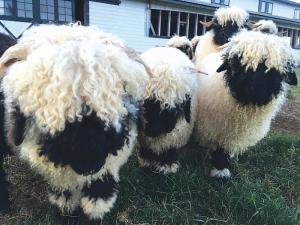 ✖  |
Known online as “the cutest sheep in the world,” the Valais Blacknose looks almost like a stuffed animal. But looks can be deceiving, as the hardy sheep have been valued in Switzerland for generations as a dual-purpose breed. Not only are the sheep stocky and well-built, but their wool is also highly valued for use in carpets and felting. It’s light on lanolin, washes white and quickly picks up dyes.
The breed hails from the Valais region of Switzerland, dating back to at least the 1400s. It’s evolved to tolerate the steep grazing land and harsh mountain conditions. As their name implies, Blacknose sheep have black noses, along with black eyes, ears, knees and feet. Paired with their naturally light coats, the contrast earns attention. Both sexes have large spiral-shaped horns. Unlike most sheep, they breed throughout the year rather than seasonally.
Today’s blacknose sheep might be descendants of a breed from pre-Roman times, known only by its skeletal remains. The alpine valleys of Switzerland created a closed environment for the breed to thrive without dilution. At times, that’s been considered a downside.
In 1884, Valais authorities attempted to cross the breed with the Australian Southdown Sheep. Unfortunately for the breeding effort, the resulting offspring were considered inferior to their genetic predecessors in terms of meat and wool production. The bloodline was restored, and the breed gained official recognition in 1962.
The Swiss Government prohibited raising the Valais Blacknose outside its borders until 2014, when select breeders in the United Kingdom and New Zealand were allowed access to the breeding stock. While Switzerland has closed down trade again, the United States Department of Agriculture has been working to import semen and embryos in hopes of establishing a robust U.S. population that meets the Swiss standards of selection.
It’s a careful process that can take several generations of sheep to earn the title of “pure-bred” Valais Blacknose. These ewes can sell for $18,000 or more, making theft a genuine concern for U.S. livestock farmers. But for the Swiss, another threat looms larger—wolves are making a comeback and can devastate a flock.
U.S. livestock enthusiasts can connect with the Valais Blacknose Sheep Society (VBSS). Established in 2017, VBSS maintains a registry of all Valais Blacknose Sheep bred according to the society’s registration rules in the United States. These rules aim to preserve the long-term integrity of the breed within the constraints of limited semen imports and strict international regulations.
In this way, the society promotes the selection of desirable traits within each generation to create a sustainable population that meets the standard for an “American Purebred.”
Contact: FARM SHOW Followup, Valais Blacknose Sheep Society (VBSSinfo@gmail.com; www.valaisblacknosesheepsociety.org).
Click here to download page story appeared in.
Click here to read entire issue
Valais Blacknose Sheep Gaining Popularity
Known online as “the cutest sheep in the world,” the Valais Blacknose looks almost like a stuffed animal. But looks can be deceiving, as the hardy sheep have been valued in Switzerland for generations as a dual-purpose breed. Not only are the sheep stocky and well-built, but their wool is also highly valued for use in carpets and felting. It’s light on lanolin, washes white and quickly picks up dyes.
The breed hails from the Valais region of Switzerland, dating back to at least the 1400s. It’s evolved to tolerate the steep grazing land and harsh mountain conditions. As their name implies, Blacknose sheep have black noses, along with black eyes, ears, knees and feet. Paired with their naturally light coats, the contrast earns attention. Both sexes have large spiral-shaped horns. Unlike most sheep, they breed throughout the year rather than seasonally.
Today’s blacknose sheep might be descendants of a breed from pre-Roman times, known only by its skeletal remains. The alpine valleys of Switzerland created a closed environment for the breed to thrive without dilution. At times, that’s been considered a downside.
In 1884, Valais authorities attempted to cross the breed with the Australian Southdown Sheep. Unfortunately for the breeding effort, the resulting offspring were considered inferior to their genetic predecessors in terms of meat and wool production. The bloodline was restored, and the breed gained official recognition in 1962.
The Swiss Government prohibited raising the Valais Blacknose outside its borders until 2014, when select breeders in the United Kingdom and New Zealand were allowed access to the breeding stock. While Switzerland has closed down trade again, the United States Department of Agriculture has been working to import semen and embryos in hopes of establishing a robust U.S. population that meets the Swiss standards of selection.
It’s a careful process that can take several generations of sheep to earn the title of “pure-bred” Valais Blacknose. These ewes can sell for $18,000 or more, making theft a genuine concern for U.S. livestock farmers. But for the Swiss, another threat looms larger—wolves are making a comeback and can devastate a flock.
U.S. livestock enthusiasts can connect with the Valais Blacknose Sheep Society (VBSS). Established in 2017, VBSS maintains a registry of all Valais Blacknose Sheep bred according to the society’s registration rules in the United States. These rules aim to preserve the long-term integrity of the breed within the constraints of limited semen imports and strict international regulations.
In this way, the society promotes the selection of desirable traits within each generation to create a sustainable population that meets the standard for an “American Purebred.”
Contact: FARM SHOW Followup, Valais Blacknose Sheep Society (VBSSinfo@gmail.com; www.valaisblacknosesheepsociety.org).
To read the rest of this story, download this issue below or click
here to register with your account number.