2025 - Volume #49, Issue #6, Page #27
[ Sample Stories From This Issue | List of All Stories In This Issue | Print this story
| Read this issue]
Honeyberries Gaining Popularity
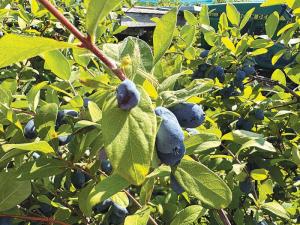 |

“Honeyberries are a unique crop,” says Madeline Wimmer, University of Wisconsin Extension fruit educator. “They’re considered an emerging crop, and many newer varieties are seen as more appealing for fresh eating.”
The honeyberry community is small but growing as customers discover this flavor-packed fruit, which some consider a cross between blueberries and strawberries.
“They’re a blue fruit, similar in health benefits to many ‘superfood’ berries, but can grow in cold climates,” Wimmer says. “They don’t require acidic soil like blueberries, meaning that farms with higher pH soils, common in Minnesota, can grow honeyberries without major soil amendments.”
Pollination is an essential growing consideration.
“Honeyberries are cross-pollinated and don’t like pollen from varieties that are too closely related,” Wimmer says. “Honeyberry pollination charts can help growers find out which varieties to plant together.”
The plants need plenty of water, nutrients and early-season pollinators to produce fruit. Removing low-hanging branches helps with commercial harvest.
“Honeyberries are, in general, a crop with fewer concerns for pests and diseases, but some diseases exist, and occasionally the spotted wing drosophila is a pest issue,” Wimmer says. “Similar to other woody shrub fruit crops, honeyberries do best with less competition, especially when young. They also need pruning to get light in the canopy and to renew older branches, most of which become less productive after five years.”
Wimmer believes there’s ample market potential for honeyberries, despite their short growing season and possible labor sourcing challenges.
“Many commercial growers shake or mechanically harvest the shrubs and freeze the berries,” she says. “That’s a great option for juicing and smoothies. Many smoothie bowl shops use acai berries, which need to be shipped internationally. Honeyberries could offer a local, nutritious alternative.”
At last summer’s Honeyberry Academy, sponsored by the University of Wisconsin and the University of Minnesota Extension offices, about 100 honeyberry enthusiasts visited a honeyberry farm, enjoyed honeyberry ice cream and candy, and sampled several varieties. Bob Bors, a plant breeder from the University of Saskatchewan, was a featured speaker. Attendees ranged from experienced honeyberry growers to home gardeners.
“The Honeyberry Academy was a big hit,” Wimmer says. “Participants got to experience a live harvest. We had tastings, and growers networked together while learning about the farming and research related to honeyberries. We hope to create similar events to support growers in the near future.”
Wimmer has plenty of advice for potential honeyberry growers.
“Plan ahead. Research varieties carefully for pollen compatibility and overall fruit quality, and keep birds in mind. Cedar wax wings love the berries, and a perimeter net might be necessary.”
She suggests leaving more space between rows than seems necessary to ensure there’s plenty of room for equipment to turn around.
“Make a plan for marketing and selling your berries before planting, and keep labor requirements in mind. Be realistic about how much you can harvest annually with your chosen harvesting method.”
Contact: FARM SHOW Followup, Madeline Wimmer, University of Minnesota Extension, 140 Elton Hills Ln. NW, Suite 201, Rochester, Minn. 55901 (ph 507-258-8777; wimm0035@umn.edu).
Click here to download page story appeared in.

Click here to read entire issue
To read the rest of this story, download this issue below or click here to register with your account number.