Spelt Offers Flavor-Packed Substitute For Baking
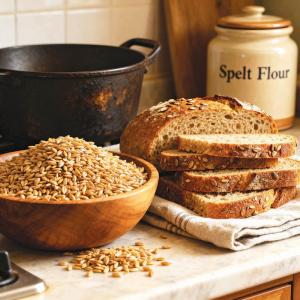 ✖  |
Spelt, an ancient wheat variety, is gaining popularity due to its versatility and bold flavor. Although spelt flour contains gluten, it’s generally easier to tolerate than regular wheat and has the advantage of not significantly impacting blood sugar levels. While baking with it yields results similar to all-purpose flour, spelt offers an extra depth of flavor. Some people describe spelt as having a tangy note, similar to yogurt. It also has a slight saltiness, which adds complexity to its flavor profile.
Spelt’s lower gluten content can make breads slightly denser. Still, it’s valued in pie crusts, yeast breads, sourdough, pizza, muffins, cookies, and as a breading for fried foods. The flour tends to be on the fluffy side, so it’s best to use 1 1/4 cups for every cup called for in a recipe. The flour should sit in liquid for 5 to 10 min. before use.
Many bakers buy spelt berries in bulk to grind at home. Others grow their own. Spelt isn’t a commercial crop, due to relatively low yields and the need for specialty harvesting equipment. Still, it’s possible to grow the berries at home in zones 3a-8b.
Plant the berries at the same time you plant winter wheat and care for them accordingly. Spelt requires less nitrogen per acre than wheat and is ready to harvest when the tops are dry, brown and crunchy. Cut the stalks, bundle them, and winnow by beating the heads into a clean, lined trash can or bucket. Toss the wheat into the air in front of a fan to blow away the chaff while the heavier wheat sinks. Freeze the grain for two weeks before eating if you’re concerned about bugs.
Spelt berries can also be sprouted. This process further reduces the gluten content and increases the availability of vitamins and minerals. To sprout them, soak the berries overnight in warm water. Drain and then place the berries in a container with a breathable lid. Keep them in a dark cabinet, and rinse twice daily. You can eat the sprouts once the berries double in size. Use them wet or dry in a dehydrator, then grind into flour. The overall flavor is similar to a sweet malt.
Like other whole-grain flours, spelt includes the bran, endosperm and germ. It’s more prone to going rancid than all-purpose flour. Store your spelt in the refrigerator if you plan to keep it for longer than a few weeks.
Click here to download page story appeared in.
Click here to read entire issue
Spelt Offers Flavor-Packed Substitute For Baking
Spelt, an ancient wheat variety, is gaining popularity due to its versatility and bold flavor. Although spelt flour contains gluten, it’s generally easier to tolerate than regular wheat and has the advantage of not significantly impacting blood sugar levels. While baking with it yields results similar to all-purpose flour, spelt offers an extra depth of flavor. Some people describe spelt as having a tangy note, similar to yogurt. It also has a slight saltiness, which adds complexity to its flavor profile.
Spelt’s lower gluten content can make breads slightly denser. Still, it’s valued in pie crusts, yeast breads, sourdough, pizza, muffins, cookies, and as a breading for fried foods. The flour tends to be on the fluffy side, so it’s best to use 1 1/4 cups for every cup called for in a recipe. The flour should sit in liquid for 5 to 10 min. before use.
Many bakers buy spelt berries in bulk to grind at home. Others grow their own. Spelt isn’t a commercial crop, due to relatively low yields and the need for specialty harvesting equipment. Still, it’s possible to grow the berries at home in zones 3a-8b.
Plant the berries at the same time you plant winter wheat and care for them accordingly. Spelt requires less nitrogen per acre than wheat and is ready to harvest when the tops are dry, brown and crunchy. Cut the stalks, bundle them, and winnow by beating the heads into a clean, lined trash can or bucket. Toss the wheat into the air in front of a fan to blow away the chaff while the heavier wheat sinks. Freeze the grain for two weeks before eating if you’re concerned about bugs.
Spelt berries can also be sprouted. This process further reduces the gluten content and increases the availability of vitamins and minerals. To sprout them, soak the berries overnight in warm water. Drain and then place the berries in a container with a breathable lid. Keep them in a dark cabinet, and rinse twice daily. You can eat the sprouts once the berries double in size. Use them wet or dry in a dehydrator, then grind into flour. The overall flavor is similar to a sweet malt.
Like other whole-grain flours, spelt includes the bran, endosperm and germ. It’s more prone to going rancid than all-purpose flour. Store your spelt in the refrigerator if you plan to keep it for longer than a few weeks.
To read the rest of this story, download this issue below or click
here to register with your account number.