How To Grow And Use Celeriac
 ✖  |
Celeriac, a less common fall vegetable, is worth including in your garden and meal plans. These knobby bulbs may resemble beets and radishes more than long-stemmed celery, but they’re part of the same family. Unlike traditional celery, the stalks are hollow and seldom eaten.
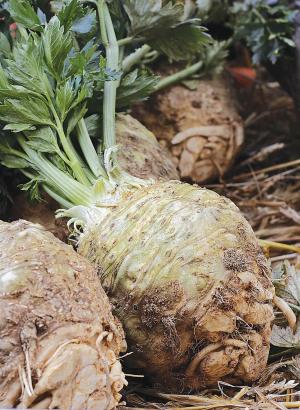
Celeriac bulbs have a creamy white interior beneath a gnarly, brown skin. Once peeled, they can be eaten raw, roasted, stewed, blanched or mashed. Think of celeriac as a nuttier, earthier version of celery stalks with less water content, making it a great potato substitute. In texture, celeriac resembles rutabaga or kohlrabi. In fact, it can replace almost any root vegetable.
The plant is a good source of vitamins B6, C and K. It’s also high in fiber, with half the carbohydrates of potatoes. When shopping, look for firm, non-wrinkled bulbs, which indicate freshness and are easier to peel. Use a sharp chef’s or paring knife, and keep the white part in acidulated water before cooking or eating. Otherwise, it’ll brown like an apple.
Celeriac is easy to grow in the right conditions. It’s very hardy and can stay in the ground through winter until spring, developing a stronger flavor over time. It takes at least six months to mature and requires consistently moist soil for successful growth.
Most gardeners start celeriac indoors to transplant in late spring or early summer. Several celeriac varieties are available, some with smoother bulbs for easier peeling, while others are less prone to bolting.
Young celeriac plants can be transplanted outdoors once the danger of frost has passed. Space the plants about 1 ft. apart to ensure good airflow. All varieties grow best in sunny locations with rich, moisture-retaining soil. Compost can significantly improve growth. Covering the planting bed with thick mulch tends to work well; just be careful to leave the plant’s crown uncovered. As the plants mature, remove their outer leaves to expose the crown, allowing it to develop.
The plant is ready for harvest from October through the following March. To harvest, use a knife to lift the bulb above the soil and cut it from the roots. Keep some soil on the root ends if you plan to store them, as it prevents them from drying out. Once harvested, celeriac can be stored for six to eight months in a sealed glass container in the refrigerator.
Click here to download page story appeared in.
Click here to read entire issue
How To Grow And Use Celeriac
Celeriac, a less common fall vegetable, is worth including in your garden and meal plans. These knobby bulbs may resemble beets and radishes more than long-stemmed celery, but they’re part of the same family. Unlike traditional celery, the stalks are hollow and seldom eaten.
Celeriac bulbs have a creamy white interior beneath a gnarly, brown skin. Once peeled, they can be eaten raw, roasted, stewed, blanched or mashed. Think of celeriac as a nuttier, earthier version of celery stalks with less water content, making it a great potato substitute. In texture, celeriac resembles rutabaga or kohlrabi. In fact, it can replace almost any root vegetable.
The plant is a good source of vitamins B6, C and K. It’s also high in fiber, with half the carbohydrates of potatoes. When shopping, look for firm, non-wrinkled bulbs, which indicate freshness and are easier to peel. Use a sharp chef’s or paring knife, and keep the white part in acidulated water before cooking or eating. Otherwise, it’ll brown like an apple.
Celeriac is easy to grow in the right conditions. It’s very hardy and can stay in the ground through winter until spring, developing a stronger flavor over time. It takes at least six months to mature and requires consistently moist soil for successful growth.
Most gardeners start celeriac indoors to transplant in late spring or early summer. Several celeriac varieties are available, some with smoother bulbs for easier peeling, while others are less prone to bolting.
Young celeriac plants can be transplanted outdoors once the danger of frost has passed. Space the plants about 1 ft. apart to ensure good airflow. All varieties grow best in sunny locations with rich, moisture-retaining soil. Compost can significantly improve growth. Covering the planting bed with thick mulch tends to work well; just be careful to leave the plant’s crown uncovered. As the plants mature, remove their outer leaves to expose the crown, allowing it to develop.
The plant is ready for harvest from October through the following March. To harvest, use a knife to lift the bulb above the soil and cut it from the roots. Keep some soil on the root ends if you plan to store them, as it prevents them from drying out. Once harvested, celeriac can be stored for six to eight months in a sealed glass container in the refrigerator.
To read the rest of this story, download this issue below or click
here to register with your account number.