2026 - Volume #50, Issue #4, Page #38
[ Sample Stories From This Issue | List of All Stories In This Issue | Print this story
| Read this issue]
Smart Grain Monitoring For Large Bins
 |
 |

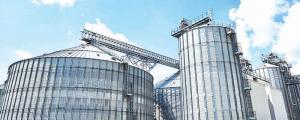
SafeGrain is addressing these issues for larger and commercially based agricultural operations.
“We don’t build bins or elevator legs, but we do our best to make them all work better,” says SafeGrain’s Director of Sales and Marketing, Bob Hothem.
The company’s strength lies in offering four connected product lines under one roof: aeration and fan automation, quality monitoring, inventory management and hazard monitoring.
“Our competitors have one or two of the products and services,” Hothem explains. “We’re a one-stop shop with all four.”
SafeGrain’s aeration systems help operators manage airflow in large bins, while its grain monitoring products track conditions that directly affect quality. Traditional temperature cables remain widely used, but SafeGrain’s newer digital systems go further by measuring temperature, moisture and carbon dioxide within the grain mass. This matters because in today’s massive bins, spoilage can develop long before a temperature-only system detects it.
“Earlier detection means earlier action, whether that’s automatically turning on fans, sending alerts, or helping customers decide when it should be moved or sold,” Hothem says.
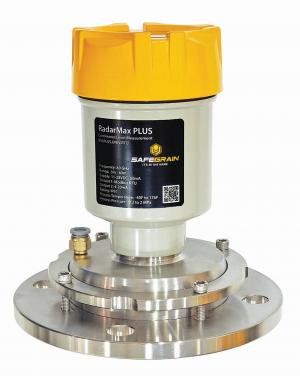
SafeGrain’s inventory management system adds another layer of control. Its radar-based level monitoring gives operators near-continuous visibility into bin levels, an advantage for facilities moving large volumes of grain in and out. Equally important is the company’s hazard-monitoring line for elevator legs, where combustible dust, overheating bearings, belt misalignment and slow-running shafts create the catastrophic risk of dust explosions.
“By alarming early and shutting equipment down when thresholds are exceeded, these systems are designed to prevent serious incidents before they start.”
All SafeGrain products and services are backed by cloud-based monitoring, mobile and computer access, technical support and flexible installation options. The systems can be used across crops, including canola, wheat and rice, with configurations tailored to the stored material.
Installations are online across Canada, the U.S., Asia, Egypt, Turkey and South America.
“SafeGrain isn’t just selling sensors and software,” Hothem says. “We’re making the case that better visibility, better automation and better protection are now central to profitable grain handling.”
Hothem recommends that interested parties contact SafeGrain through the website for details on pricing, availability and installation options.
Contact: FARM SHOW Followup, SafeGrain, 10522 Success Ln., Dayton, Ohio 45458 (ph 800-659-8250; info@safegrain.com; www.safegrain.com).
Click here to download page story appeared in.

Click here to read entire issue
To read the rest of this story, download this issue below or click here to register with your account number.