Flare Gas Fuels Food Production
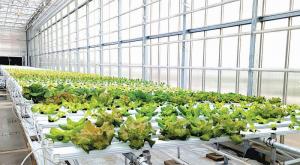 ✖  |
Oil-well gases that are normally burned off are now being used to grow food in greenhouses in North Dakota. The 3 1/3-acre greenhouse is the first phase of a planned four-phase, 14 1/2-acre greenhouse complex being developed by the Mandan, Hidatsa and Arikara Nation (MHA). Native Grow Green (NG2) is located on the Fort Berthold reservation, which produces roughly one-fifth of North Dakota’s oil. Revenue from that oil is financing the use of flare gas.
“Oil production often results in a lot of gas that’s wasted by flaring,” says Mark N. Fox, MHA Nation chairman. “Oil companies use it all of the time for operations and maintenance, but in small quantities. This is the first time MHA has used it.”
Fox conceived the idea after reading about the Netherlands’ use of greenhouse technology and natural gas to produce heat, power and CO2. The small European country is the world’s second-largest food exporter, behind the U.S.
In 2018, Fox led a delegation of tribal business council members, agricultural experts and architects to visit greenhouses in the Netherlands to learn about the technology.
“With our access to natural gas, water and land, a greenhouse project was ideally suited here,” says Fox.
When fully operational, the first phase is expected to produce 1.8 million lbs. of produce per year. That would be enough to supply 25,000 people with 70 lbs. of produce per year. Currently, the 30 employees are producing leafy greens, strawberries, bell peppers and cucumbers.
The self-contained, climate-controlled greenhouse is designed to collect rainwater and snowmelt for irrigating the crops inside.
When completed, the full 412,000 sq. ft. of greenhouses are expected to employ 50 people and produce more than 10 million lbs. of food annually. Upon completion, the facility would be one of the largest of its kind in the world.
In addition to the first-phase greenhouse, the complex includes an administrative building, a warehouse, solar panels, an on-site market, an experience center with a multi-use classroom, and a flare gas processing center.
“We have the ability to compress raw flare gas ourselves and process the byproducts, as well as provide power to the electric grid,” says Fox. “We’re not currently producing fertilizer, but long term, we’ll be developing fertilizer as part of our energy development.”
Fox acknowledges that achieving a full return on the investment required for the entire project may take 20 years or more. However, he feels it’s already paying dividends.
“Our ROI right now is the jobs we provide, being able to provide quality produce to our tribal members, local communities and the surrounding areas, as well as educational aspects,” says Fox.
Food is being marketed on and off the reservation and distributed to tribal programs and to some local food banks.
“Other potential distributions we’re working towards are with neighboring tribes, military bases and local schools,” says Fox. “We’re providing quality, pesticide-free, non-GMO produce that’s affordable and beneficial to many.”
Contact: FARM SHOW Followup, Native Grow Green, 7226 39th St. NW, Parshall, N.D. 58770 (ph 701-862-4825; www.nativegreengrow.com).

Click here to download page story appeared in.
Click here to read entire issue
Flare Gas Fuels Food Production
Oil-well gases that are normally burned off are now being used to grow food in greenhouses in North Dakota. The 3 1/3-acre greenhouse is the first phase of a planned four-phase, 14 1/2-acre greenhouse complex being developed by the Mandan, Hidatsa and Arikara Nation (MHA). Native Grow Green (NG2) is located on the Fort Berthold reservation, which produces roughly one-fifth of North Dakota’s oil. Revenue from that oil is financing the use of flare gas.
“Oil production often results in a lot of gas that’s wasted by flaring,” says Mark N. Fox, MHA Nation chairman. “Oil companies use it all of the time for operations and maintenance, but in small quantities. This is the first time MHA has used it.”
Fox conceived the idea after reading about the Netherlands’ use of greenhouse technology and natural gas to produce heat, power and CO2. The small European country is the world’s second-largest food exporter, behind the U.S.
In 2018, Fox led a delegation of tribal business council members, agricultural experts and architects to visit greenhouses in the Netherlands to learn about the technology.
“With our access to natural gas, water and land, a greenhouse project was ideally suited here,” says Fox.
When fully operational, the first phase is expected to produce 1.8 million lbs. of produce per year. That would be enough to supply 25,000 people with 70 lbs. of produce per year. Currently, the 30 employees are producing leafy greens, strawberries, bell peppers and cucumbers.
The self-contained, climate-controlled greenhouse is designed to collect rainwater and snowmelt for irrigating the crops inside.
When completed, the full 412,000 sq. ft. of greenhouses are expected to employ 50 people and produce more than 10 million lbs. of food annually. Upon completion, the facility would be one of the largest of its kind in the world.
In addition to the first-phase greenhouse, the complex includes an administrative building, a warehouse, solar panels, an on-site market, an experience center with a multi-use classroom, and a flare gas processing center.
“We have the ability to compress raw flare gas ourselves and process the byproducts, as well as provide power to the electric grid,” says Fox. “We’re not currently producing fertilizer, but long term, we’ll be developing fertilizer as part of our energy development.”
Fox acknowledges that achieving a full return on the investment required for the entire project may take 20 years or more. However, he feels it’s already paying dividends.
“Our ROI right now is the jobs we provide, being able to provide quality produce to our tribal members, local communities and the surrounding areas, as well as educational aspects,” says Fox.
Food is being marketed on and off the reservation and distributed to tribal programs and to some local food banks.
“Other potential distributions we’re working towards are with neighboring tribes, military bases and local schools,” says Fox. “We’re providing quality, pesticide-free, non-GMO produce that’s affordable and beneficial to many.”
Contact: FARM SHOW Followup, Native Grow Green, 7226 39th St. NW, Parshall, N.D. 58770 (ph 701-862-4825; www.nativegreengrow.com).
To read the rest of this story, download this issue below or click
here to register with your account number.