Better Crops With Fewer Inputs Using AI
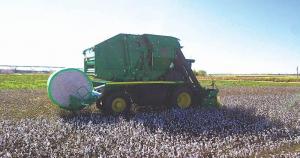 ✖  |
Avalo, Inc. is revolutionizing how new crop varieties are bred and introduced. Founded in 2021, Avalo’s Gaius AI platform combines traditional crop breeding with AI to develop superior genetics. Avalo’s drought-tolerant, dryland cotton varieties require less fertilizer and fewer pesticides, and they produce more, higher-quality fiber.
“We drew on the USDA Cotton Germplasm Collection housed at College Station, Texas, as well as other public and private germplasm collections,” says Rebecca White of Avalo. “However, we also looked at the total supply chain, from agronomic inputs and practices to harvest, transport, processing and end use.”
Gaius selected traits to enhance productivity and efficiency (more higher-value product with fewer inputs). These were combined with traits desired by industry and consumers, such as stronger, longer fiber produced with fewer farm chemicals and a lower carbon footprint.
The combined wish list became the foundation for Avalo’s fast-track breeding program. White worked with cotton producers around Lubbock, Texas, where a third of U.S. cotton is grown. For her, the program was both professional and personal.
“My family raised cotton, cattle and peanuts in the area,” she says. “My brother still farms the home place and helped find the early adopters in our program. We offered them an incentive program for following our agronomic practices and reduced seed costs.”
In 2025, cotton producers participating in the program saw results. One variety produced 343% as much cotton by weight as the control. It did so with 75% less fertilizer and no irrigation, qualifying it for a low-carbon cotton premium. At the same time, it improved by two to three grades in quality due to fiber length, elongation, strength and spinnability.
Rather than genetic engineering, Avalo describes its crop development program as AI-guided crop evolution. No non-cotton genes were added, and no CRISPR-based gene editing was used. This eliminates both regulatory approvals and consumer concerns.
In addition to cotton, Gaius has been applied to sugarcane, tomatoes, strawberries and broccoli. The company is also working on rice and natural rubber.
“We follow a similar process with all the crops we work on,” says White. “We start with the broadest genetic base we can.”
The goal is to identify the improvements needed to add value across the entire supply chain, not just among farmers or processors.
“We worked in collaboration with a tomato processor on advanced traits for that crop,” says White. “With sugarcane, we’re working with Coca-Cola. With the broccoli, we worked with a chef in New York who was looking for a fast-growing plant that tastes very good.”
The Gaius-guided effort produced high-quality, nutritious broccoli that matured in 37 days.
“It tastes very good, and the entire plant is edible,” says White. “It has won taste tests by panels of top chefs, and the fast growth means it will avoid some of the late-season diseases. This reduces the use of pesticides, which consumers prefer, and reduces farmer input costs.”
White notes that one vegetable seed company is evaluating the new variety, adding, “We hope to see it move into the seed supply chain within the next 6 to 12 months.”
The benefits that Gaius brings to the supply chain go beyond the crop itself, enhancing overall efficiency. Company CEO Brendon Collins described it as informing every company decision, from predicting labor needs at the farm level to reserving cotton ginning capacity based on genetic gain predictions to determining how many fashion brands to talk to for marketing the coming crop’s yield.
The Avalo system includes both hardware and software. Drones with multispectral cameras feed imagery to Gaius. Gaius selects certain plants because it has inferred their genotypes from the phenotypes captured in the images. When the harvested seeds are sorted for defects, near-infrared hyperspectral imaging identifies metabolites in the seeds. Based on these metabolites, Gaius infers the genetics and sorts the best as they pass through the machine at 20 seeds per second.
Without the drone and seed selection, all the seeds from all the fields would need to be genetically sequenced to identify the desired traits. Collins suggests that with Gaius, only the best may be selected, perhaps a few thousand out of millions.
What this means for farmers down the road is the ability to select seeds for specific growing systems. Instead of adding inputs to control the local environment for seeds that can be grown anywhere, seeds will be selected for a farmer’s environment and end use.
Contact: FARM SHOW Followup, Avalo, Inc., 9 Laboratory Dr., Suite 262. Durham, N.C. 27713 (www.avalo.ai).
Click here to download page story appeared in.
Click here to read entire issue
Better Crops With Fewer Inputs Using AI
Avalo, Inc. is revolutionizing how new crop varieties are bred and introduced. Founded in 2021, Avalo’s Gaius AI platform combines traditional crop breeding with AI to develop superior genetics. Avalo’s drought-tolerant, dryland cotton varieties require less fertilizer and fewer pesticides, and they produce more, higher-quality fiber.
“We drew on the USDA Cotton Germplasm Collection housed at College Station, Texas, as well as other public and private germplasm collections,” says Rebecca White of Avalo. “However, we also looked at the total supply chain, from agronomic inputs and practices to harvest, transport, processing and end use.”
Gaius selected traits to enhance productivity and efficiency (more higher-value product with fewer inputs). These were combined with traits desired by industry and consumers, such as stronger, longer fiber produced with fewer farm chemicals and a lower carbon footprint.
The combined wish list became the foundation for Avalo’s fast-track breeding program. White worked with cotton producers around Lubbock, Texas, where a third of U.S. cotton is grown. For her, the program was both professional and personal.
“My family raised cotton, cattle and peanuts in the area,” she says. “My brother still farms the home place and helped find the early adopters in our program. We offered them an incentive program for following our agronomic practices and reduced seed costs.”
In 2025, cotton producers participating in the program saw results. One variety produced 343% as much cotton by weight as the control. It did so with 75% less fertilizer and no irrigation, qualifying it for a low-carbon cotton premium. At the same time, it improved by two to three grades in quality due to fiber length, elongation, strength and spinnability.
Rather than genetic engineering, Avalo describes its crop development program as AI-guided crop evolution. No non-cotton genes were added, and no CRISPR-based gene editing was used. This eliminates both regulatory approvals and consumer concerns.
In addition to cotton, Gaius has been applied to sugarcane, tomatoes, strawberries and broccoli. The company is also working on rice and natural rubber.
“We follow a similar process with all the crops we work on,” says White. “We start with the broadest genetic base we can.”
The goal is to identify the improvements needed to add value across the entire supply chain, not just among farmers or processors.
“We worked in collaboration with a tomato processor on advanced traits for that crop,” says White. “With sugarcane, we’re working with Coca-Cola. With the broccoli, we worked with a chef in New York who was looking for a fast-growing plant that tastes very good.”
The Gaius-guided effort produced high-quality, nutritious broccoli that matured in 37 days.
“It tastes very good, and the entire plant is edible,” says White. “It has won taste tests by panels of top chefs, and the fast growth means it will avoid some of the late-season diseases. This reduces the use of pesticides, which consumers prefer, and reduces farmer input costs.”
White notes that one vegetable seed company is evaluating the new variety, adding, “We hope to see it move into the seed supply chain within the next 6 to 12 months.”
The benefits that Gaius brings to the supply chain go beyond the crop itself, enhancing overall efficiency. Company CEO Brendon Collins described it as informing every company decision, from predicting labor needs at the farm level to reserving cotton ginning capacity based on genetic gain predictions to determining how many fashion brands to talk to for marketing the coming crop’s yield.
The Avalo system includes both hardware and software. Drones with multispectral cameras feed imagery to Gaius. Gaius selects certain plants because it has inferred their genotypes from the phenotypes captured in the images. When the harvested seeds are sorted for defects, near-infrared hyperspectral imaging identifies metabolites in the seeds. Based on these metabolites, Gaius infers the genetics and sorts the best as they pass through the machine at 20 seeds per second.
Without the drone and seed selection, all the seeds from all the fields would need to be genetically sequenced to identify the desired traits. Collins suggests that with Gaius, only the best may be selected, perhaps a few thousand out of millions.
What this means for farmers down the road is the ability to select seeds for specific growing systems. Instead of adding inputs to control the local environment for seeds that can be grown anywhere, seeds will be selected for a farmer’s environment and end use.
Contact: FARM SHOW Followup, Avalo, Inc., 9 Laboratory Dr., Suite 262. Durham, N.C. 27713 (www.avalo.ai).
To read the rest of this story, download this issue below or click
here to register with your account number.