
2026 - Volume #50, Issue #3, Page #09
[ Sample Stories From This Issue | List of All Stories In This Issue | Print this story
| Read this issue]
Farm Brings Hydroponics To Kansas Schools
 |

“I moved from California to Kansas during the pandemic to start Leafy Green Farms,” he says. “I saw a need for more fresh vegetables to be grown and consumed locally.”
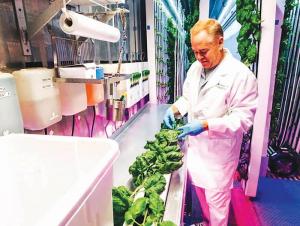
Fourby’s chosen method is hydroponics, the process of growing crops in water-based nutrient solutions rather than in soil. His system uses a controlled indoor environment in converted shipping containers to optimize variables such as temperature, humidity and lighting, with plenty of vertical space to grow greens from floor to ceiling in upright racks and towers.
The greens grow for six weeks in their vertical towers in preparation for two harvests per week. Approximately 200 heads are harvested at a time, most of which are donated to food pantries in Joplin.
The farm specializes in lettuce and other leafy crops that thrive vertically, such as Swiss chard and basil. Seeds are planted in pods, with about 10 pods per tower. Each tower is roughly 6 in. wide and includes a wick running down the center to help the plants retain moisture. Water and liquid nutrients are dispensed at the top of the tower. As the water flows down, the plants take what they need, and the excess is recycled back into the tank.
“Growing hydroponically allows for control over the grow environment,” says Fourby. “We use 90% less water than traditional farming.”
The indoor nature of hydroponic farms also leads to minimal pest problems and almost no need for pesticides. If insects become an issue, Fourby can drop the container’s internal temperature to freeze them out. He works independently of weather conditions and can grow his greens year-round.
The farm began as a business venture to produce local, affordable greens for sale. It has since evolved into a community outreach program that provides schools with agricultural learning opportunities. A grant has expanded the mission by delivering shipping-container farms to local schools in Southeast Kansas through the Farm Classroom program.
The shipping containers are delivered, hooked up, and put in working order, then left for the teachers to use in lesson plans. Then Leafy Green Farms acts like a pool service, coming in at night or on weekends for general maintenance.
“Students and teachers work together inside the vertical farms and produce food year-round,” says Fourby. “There’s a real philosophy of a place for everything and everything in its place. Students start with seeds, grow them to a seedling stage, and then transfer them to a vertical tower. From that point on, they monitor and eventually harvest and repeat the process.”
Leafy Green Farms currently supports 10 school farms, offering an experience that is satisfying for all.
“The students can see how their efforts have grown and paid off, especially when they recognize their grown lettuce in the cafeteria,” says Fourby.
He advises potential hydroponic farmers to adopt the curiosity of these high school students and to increase their exposure to hydroponic systems.
“Visit one of the many vertical container farms that are now being operated in Southeast Kansas High Schools, or visit our website.”
Contact: FARM SHOW Followup, Leafy Green Farms, 3402 Airport Cir., Pittsburg, Kan. 66762 (ph 620-869-1202; leslie.m@leafygreenfarms.org; www.leafygreenfarms.org).

Click here to download page story appeared in.

Click here to read entire issue
To read the rest of this story, download this issue below or click here to register with your account number.