
2026 - Volume #50, Issue #2, Page #08
[ Sample Stories From This Issue | List of All Stories In This Issue | Print this story
| Read this issue]
University Studies Cut Flowers As An Alternate Crop
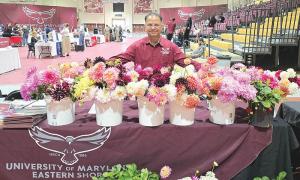 |

“This project started very unexpectedly,” says Dr. Naveen Kumar Dixit, extension specialist and associate professor of horticulture. “While purchasing rose bushes online for my home garden, I came across a random advertisement offering a sale on dahlia tubers. Their incredible colors, shapes, and overall beauty caught my attention. Out of curiosity, I ordered more than 50 dahlia varieties for my backyard.”
Dahlias, native to Mexico, come in more than 20,000 varieties. The university houses 39 varieties, while Dixit has more than 80 in his own yard.
His interest quickly expanded beyond personal use.
“I found that while the number of dahlia growers in Maryland has been steadily increasing, it’s too low to fully tap into the strong local and regional cut-flower market.”
A large share of cut flowers sold in the United States is imported from countries such as China and India. Long shipping times force growers to prioritize vase life over other selling points, creating market opportunities for domestic growers to fill these gaps.
“Dahlias, gladiolus and zinnias are ideal examples. They can’t handle long shipping times and perform best when grown and sold locally. This makes them excellent candidates for small and medium-sized growers. The short vase life of these flowers, often less than a week, actually creates an opportunity for weekly sales through direct home delivery, subscriptions or local markets.”
Dixit’s research found strong interest among farmers, particularly those seeking to diversify their operations. He secured two grants to support cut-flower research, outreach and farmer training: a USDA Extension Implementation Program grant and a Northeast SARE Professional Development Program grant.
“These projects focus on training local farmers to grow dahlias commercially, diversify farm income, and attract new consumers to agriculture,” says Dixit. “After all, flowers have universal appeal, and dahlias, with their diversity and beauty, are especially hard to resist.”
The initial cost of dahlia tubers can be high, but a well-established bed will produce for years. Likewise, the tubers multiply as they spread, providing farmers willing to dig them up with a secondary source of income.
“Flowers also offer more frequent harvest opportunities, as many cut-flower crops are harvested weekly, for steady cash flow throughout the season,” Dixit says.
He emphasizes that farmers don’t need a large amount of land to get started with cut flowers.
“I always recommend growers identify their potential market and start small. This reduces risk as farmers learn production, harvesting and marketing skills.”
Still, growing flowers differs from cultivating traditional crops. Customers value long stems on flowers, but dahlia stems are hollow, making them prone to wind damage. Staking works best for taller varieties, but shorter ones can still be used in garlands and arrangements.
“While all crops require good soil, water and nutrient management, flower production places a much stronger emphasis on appearance, timing and postharvest handling.”
Dixit believes the effort is well worth it.
“Because flowers are considered a specialty product, growers can command premium prices, particularly for fresh, locally grown blooms that are harvested and sold within a short time window.”
Contact: FARM SHOW Followup, Dr. Naveen Kumar Dixit, University of Maryland Eastern Shore (fnaveenkumar@umes.edu).

Click here to download page story appeared in.

Click here to read entire issue
To read the rest of this story, download this issue below or click here to register with your account number.