2026 - Volume #50, Issue #2, Page #07
[ Sample Stories From This Issue | List of All Stories In This Issue | Print this story
| Read this issue]
She Specializes In Field-To-Teapot Herbal Teas
 |

“There are two origin stories here,” says Katelyn Melvin, the farm’s founder. “How I started a farm and the origin of Katydid Hill, which began when I met Ben.”
As a child, Melvin caught the green spark and planted her first herb garden in her parents’ backyard. When she reached young adulthood, Melvin worked on vegetable farms while studying herbs on the side.
“Finally, I got the gumption to lease-to-own a small farm in Orwigsburg,” she says. “I grew everything at first, from cut flowers to ingredients for elixirs, then began homing in on a few key crops.”
She met partner Ben Wissinger a few years later, when several goats got on the wrong side of their fence. After Ben took a job on her farm, the pair fell in love. Melvin moved her operation to Ben’s family farm with the vision of growing herbs for tea.
“We wanted the farm to be sustainable not just in the way we were growing organically but also sustainable for us as small farmers and everyone who works with us.”
The decision to focus on herbs was easy.
“I always felt drawn to herbs,” Melvin says. “The relationship between plants and people across time and cultures is fascinating. Herbs evoke so much emotion and memory, and I wanted to focus on super high-quality herbs for our regional markets.”
She notes that herbal tea bags can be lacking. Most are filled with old, over-dried plant material that may not match the label.
“I love being able to connect people with a gorgeously fragrant and truly medicinal herbal tea,” Melvin says. “Herbal teas foster connection—the growers with the tea drinkers, and, of course, making a pot of tea to share is such a simple, loving and intimate act of connection with others.”
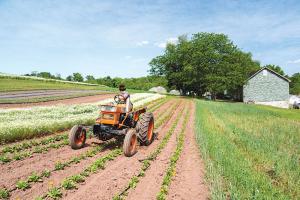
Today, Katydid Hill Farm is USDA-certified organic. The property spans 40 acres of organic farmland, including six acres of herb fields, processing facilities and a retail store—enough to keep Katelyn and Ben busy with their four employees.
Herbs are less demanding than agronomic crops for pest control and fertility, as they are affected only occasionally by fungi such as rust and powdery mildew. This makes the farm’s biggest challenge its commitment to growing 100% of the herbs used in its teas.
“Having a vertically integrated business is what makes our tea so special and high-quality,” Melvin says. “We have our core group of tea blends, and if we have crop failure due to weather or other factors, we just have to be out of that tea until the next harvest. It’s stressful being out of some of our most popular blends just because it rained a lot last May and the chamomile yields were down. But we try to maintain enough diversity to have resilience, even as we keep our farm systems simple.”
Still, the joy of seeing a customer’s face light up while drinking her tea makes the hard days worthwhile.
For Melvin, chamomile is an underrated herb.
“A fresh cup of chamomile tea is worlds away from a tea bag from the store—think about the difference between a rock-hard, half-green tomato in January and a sun-ripened heirloom from your garden in August.”
Chamomile flowers offer a fresh alternative to most chamomile teas on the market. She incorporates chamomile into many blends, along with the farm’s other herbs, including peppermint, spearmint, apple mint, calendula, tulsi and lavender.
“I’m always coming up with a new blend. The flavor from the plants’ delicate essential oils is the medicine. We strive to keep them intact throughout the growing, harvesting, drying and packaging process. When you taste that bold flavor of our blends, you know that the herbs are supporting your digestion, your immune system, and more, as well as giving you that nice, soothing sip.”
Melvin credits much of Katydid Hill Farm’s success to finding her community early.
“Talk to your neighbors, reach out to mentors, and build community. I felt a lot like a one-woman show at times in the early days, but it truly never would’ve happened without the support of friends, family, co-workers, and my neighbors. Farming is hard, and it can be isolating, and I don’t think it was ever meant to be something that’s done alone.”
Contact: FARM SHOW Followup, Katydid Hill Farm, Sinking Spring, Pa. (info@katydidhill.com; www.katydidhill.com).
Click here to download page story appeared in.

Click here to read entire issue
To read the rest of this story, download this issue below or click here to register with your account number.