
2025 - Volume #49, Issue #6, Page #06
[ Sample Stories From This Issue | List of All Stories In This Issue | Print this story
| Read this issue]
Seed Cleaning Kit Helps Growers
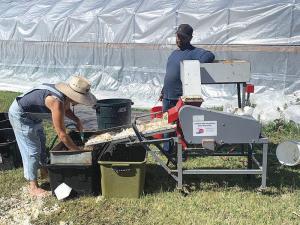 |

The practical how-to guide is made for beginner seed growers. However, it provides enough technical detail and advice to also benefit experienced growers who want to increase the scale and efficiency of their seed production.
The Washington State Department of Agriculture’s Specialty Crop Block Grant supported the development of the Toolkit. It clarifies the differences between wet and dry seed crops and the seeds themselves. It also offers tips for each, suggested seed-cleaning equipment, and resources for seed savers.
Dry seeds are those found in husks, pods or seed heads that dry on the plant. Wet seeds are embedded in the flesh of fruits, usually from the Solanaceae (tomato and pepper) family and the Cucurbita (squash, melon and cucumber) family. Dry seeds are threshed to separate them from other plant material. Wet seeds typically require additional steps, such as fermentation, decanting and rinsing.
The kit covers various types of threshing, from manual to mechanized. It also reviews screening methods and winnowing of dry seeds, along with the extra steps needed for wet seeds.
Tips are provided for commonly saved dry and wet-seeded crops. A link to a detailed selection of equipment for both wet and dry seeds is included. A list of webinars on the topic is also provided.
Contact: FARM SHOW Followup, Organic Seed Alliance, P.O. Box 772, Port Townsend, Wash. 98368 (ph 360-385-7192; info@seedalliance.org; www.seedalliance.org).
Click here to download page story appeared in.

Click here to read entire issue
To read the rest of this story, download this issue below or click here to register with your account number.